

n today’s environmentally conscious world, the packaging industry is undergoing a significant transformation. One area that has seen considerable innovation is the design and production of empty deodorant containers. These containers are not just functional but also play a crucial role in sustainability efforts. This article explores the latest trends and solutions in empty deodorant container design, focusing on materials, customization, and environmental impact.
Materials and Sustainability
The choice of materials for empty deodorant containers is critical in determining their environmental footprint. Traditional plastic containers are increasingly being replaced by more sustainable alternatives. One such material is molded pulp, which is derived from recycled paper and cardboard. Molded pulp is biodegradable, compostable, and aligns perfectly with the growing demand for eco-friendly packaging solutions.
Many molded pulp packaging manufacturers are now offering empty deodorant containers made from this material. These containers not only reduce the reliance on plastic but also provide a durable and lightweight option for consumers. The use of molded pulp in deodorant packaging is a testament to the industry’s commitment to sustainability.
Did you know? Molded pulp packaging can decompose naturally, leaving no harmful residues in the environment. This makes it an ideal choice for eco-conscious brands and consumers.
Customization and Brand Identity
Customization is another key trend in the design of empty deodorant containers. Brands are leveraging the versatility of materials like molded pulp to create packaging that reflects their identity and values. Custom designs can include brand logos, colors, and even unique shapes that make the product stand out on the shelves.
For instance, some molded pulp packaging manufacturers offer the option to create bespoke deodorant containers that align with a brand’s aesthetic and messaging. This level of customization not only enhances the product’s appeal but also communicates a commitment to sustainability and innovation.
Product Innovation and Design Flexibility
Innovation is driving the development of new and improved empty deodorant containers. Manufacturers are investing in research and development to enhance the properties of materials like molded pulp, making them suitable for a wider range of applications. This includes improving the durability, moisture resistance, and overall functionality of the containers.
Design flexibility is another significant advantage of using materials like molded pulp. These containers can be shaped to accommodate various product forms and sizes, offering a versatile solution for different brands and product lines. This adaptability ensures that empty deodorant containers can meet the specific needs of each product, from compact travel sizes to larger family packs.
Transition from Single-Use to Reusable Solutions
A notable trend in the packaging industry is the shift from single-use to reusable solutions. While traditional deodorant containers are often discarded after use, there is a growing movement towards durable and reusable options. This shift aligns with the global push towards circular economies, encouraging the use of packaging that can be recycled and repurposed over multiple cycles.
Molded pulp is particularly well-suited for this transition. Its durability and eco-friendly properties make it an excellent choice for reusable deodorant containers. Some molded pulp packaging manufacturers are now offering containers that can be refilled, reducing waste and promoting sustainable consumption practices.
Regulatory Support and Standards Compliance
Governments and regulatory agencies worldwide are increasingly recognizing the importance of environmentally friendly packaging. This has led to the establishment of standards and certifications that encourage the use of sustainable materials like molded pulp. Compliance with these standards not only ensures that products meet regulatory requirements but also reinforces a brand’s commitment to sustainability.
For example, certifications from organizations like the Forest Stewardship Council (FSC) and the Sustainable Forestry Initiative (SFI) are becoming essential for packaging manufacturers. These certifications demonstrate that the materials used in empty deodorant containers are sourced responsibly and sustainably.
Supply Chain Resilience and Localized Production
The packaging industry is also focusing on building supply chain resilience by promoting localized production. This approach reduces transportation-related carbon footprints and ensures a stable supply chain. By establishing production facilities closer to end-users, manufacturers can offer more sustainable and efficient solutions.
Many molded pulp packaging manufacturers are adopting this strategy, producing empty deodorant containers in regions where they are most needed. This not only reduces the environmental impact of transportation but also supports local economies and communities.
Cost-Efficiency and Economic Viability
While sustainability is a key driver in the packaging industry, cost-efficiency and economic viability are also important considerations. The production of empty deodorant containers from materials like molded pulp is becoming more cost-effective due to technological advancements and streamlined processes.
This makes molded pulp an attractive option for brands looking for eco-friendly and economical packaging solutions. The combination of sustainability and cost-efficiency ensures that empty deodorant containers made from molded pulp are accessible to a wide range of brands and consumers.
Conclusion
The design and production of empty deodorant containers are evolving to meet the demands of a more sustainable and environmentally conscious world. Materials like molded pulp are at the forefront of this transformation, offering biodegradable, customizable, and cost-effective solutions. As brands and consumers continue to prioritize eco-friendly alternatives, the use of molded pulp in deodorant packaging is set to grow, paving the way for a more sustainable future.
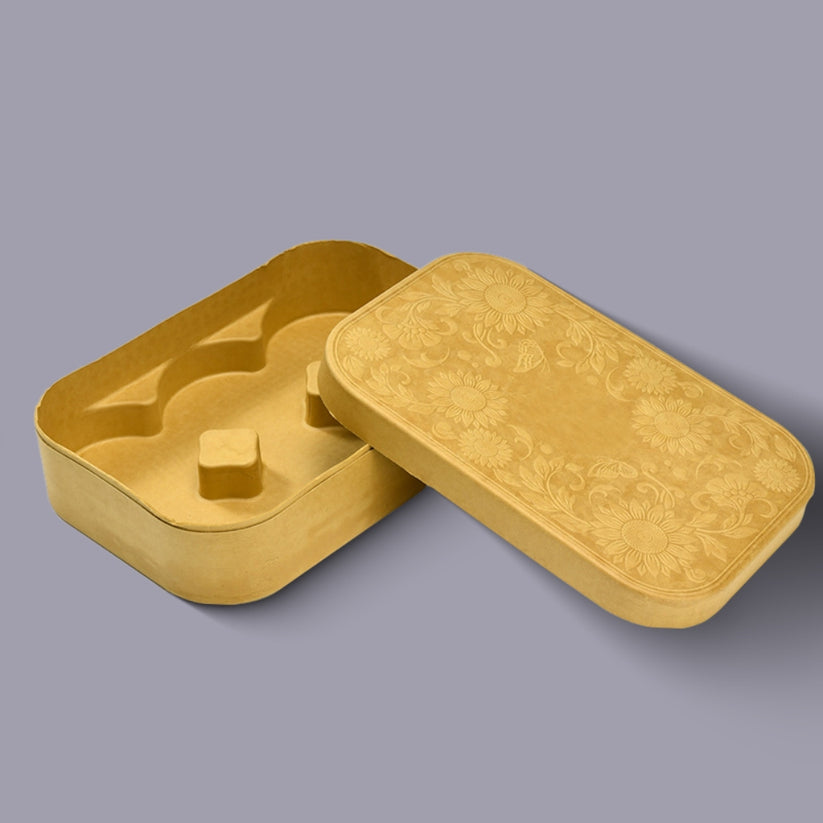
Image Source: Otarapack
Comparison of Packaging Materials
| Material | Biodegradability | Cost | Customization | Durability |
|---|---|---|---|---|
| Molded Pulp | High | Medium | High | Medium |
| Plastic | Low | Low | Medium | High |
| Glass | High | High | Low | High |
| Metal | Medium | High | Low | High |